

Quantum materials research is entering a pivotal and highly transformative phase. Once driven primarily by theoretical physics and small-scale laboratory exploration, the field is now rapidly converging with real-world engineering, industrial manufacturing, and national technology strategies. Around the world, governments, research institutes, and private industry are investing heavily in quantum technologies as they race to unlock advances in computing, sensing, communications, navigation, energy systems, and advanced electronics.
This acceleration has been particularly visible throughout the International Year of Quantum Science and Technology (2025), where conferences, collaborative programmes, and major funding initiatives have highlighted how quantum research is shifting from scientific curiosity toward technological infrastructure. Events such as the Magneto-Optics in Quantum Light and Matter Conference 2025, held at the National Physical Laboratory and hosted by QD-UKI, demonstrate how closely materials science, instrumentation, and device engineering are now intertwined.
Several wider trends are driving this momentum. Researchers are increasingly focused on scalable quantum architectures rather than isolated proof-of-concept demonstrations. Semiconductor-compatible quantum materials are attracting major attention as industries seek pathways toward manufacturable quantum devices. At the same time, advances in AI-assisted materials discovery, high-throughput experimentation, and precision characterisation are dramatically accelerating the pace at which new materials can be identified, tested, and optimised.
Another major shift is the growing convergence between quantum computing, photonics, spintronics, and advanced semiconductor research. Materials once studied purely for exotic physical behaviour are now being evaluated for their compatibility with quantum processors, ultra-sensitive detectors, neuromorphic systems, and secure communication networks.
At the centre of all these developments is a critical enabling factor: advanced measurement and characterisation technology. As quantum systems become more sophisticated, researchers require tools capable of operating under extreme conditions while delivering reproducible, high-resolution insight into material behaviour at the atomic and electronic scale.
Below are three key trends shaping quantum materials research today—and how instrumentation is enabling each one.
1. From Discovery to Control: Engineering Quantum States with Precision
Quantum materials research is moving beyond discovery into precise control of quantum states, including superconductivity, topological phases, and correlated electron systems.
A major shift in the wider quantum sector reflects this: the focus is no longer just on increasing qubit counts, but on stability, coherence, and error reduction.
For materials scientists, this translates into:
- Tuning electronic phases with temperature, magnetic field, and pressure
- Exploring emergent phenomena in low-dimensional and van der Waals materials
- Stabilising exotic states for device integration
Instrumentation Enablers
This level of control is only possible with highly specialised platforms:
- Cryogenic systems for ultra-low temperature measurements
- High-field magnetometry for probing quantum phase transitions
- Integrated transport + magnetic measurement systems

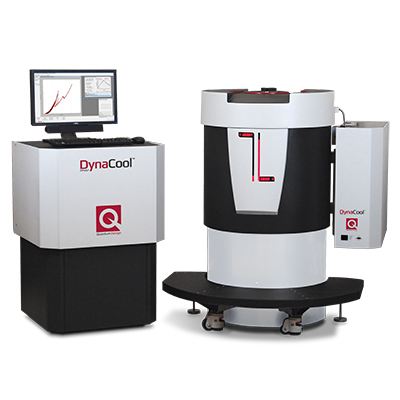
These are the workhorse platforms of quantum materials research. These systems underpin the shift from observing quantum phases to actively tuning and stabilising them.
They enable:
- Precise control of temperature (down to ~1.8 K or below with options)
- Application of high magnetic fields
- Measurement of:
- Electrical transport (resistivity, Hall effect)
- Magnetic properties (susceptibility, moment)
Perfectly aligned with:
- Superconductivity studies
- Topological materials
- Correlated electron systems
2. Extreme Conditions, Real Insights: Research at the Limits
Quantum phenomena often emerge only under extreme experimental conditions—millikelvin temperatures, high magnetic fields, ultrafast timescales, and nanoscale resolution.
Recent research and conferences highlight how breakthroughs are increasingly tied to experiments conducted at these limits, particularly in:
- Quantum light–matter interaction
- Magneto-optical effects
- Low-dimensional quantum systems
At the same time, discoveries such as materials that can switch between insulating and metallic states under controlled conditions point to radically new device paradigms.
Instrumentation Enablers
To access these regimes, researchers rely on:
- Closed-cycle cryostats and dilution refrigerators
- Optical cryostats for magneto-optics and photonics experiments
- High-sensitivity probes for nanoscale characterisation
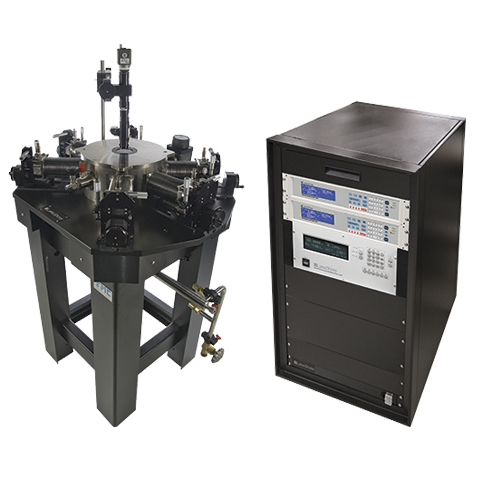

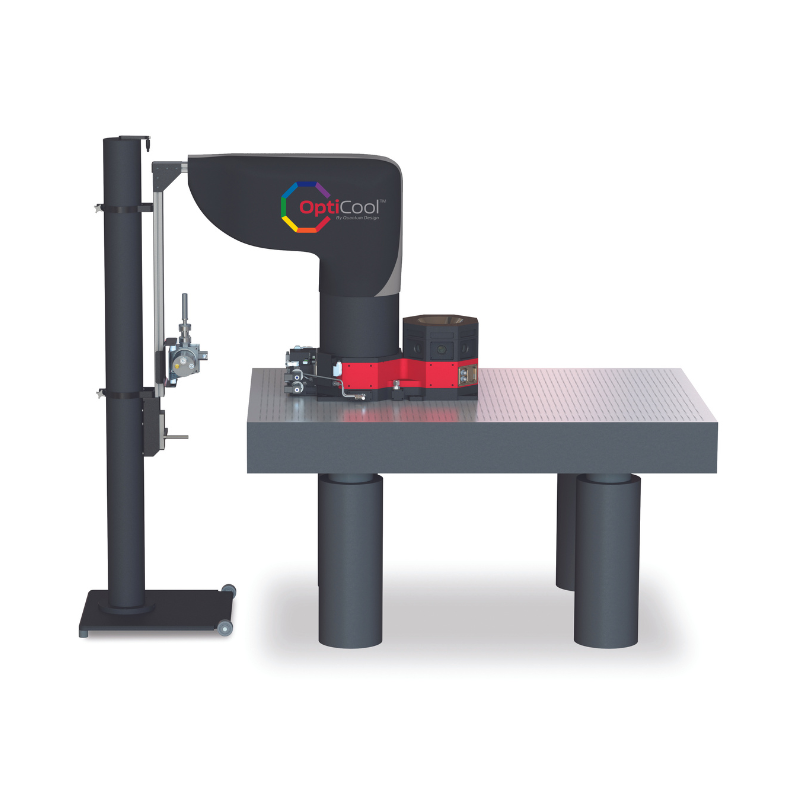
These platforms make extreme temperature conditions routine and reproducible, which is essential for meaningful quantum experiments.
Directly supports:
- Magneto-optics
- Quantum photonics
- Low-dimensional systems
3. From Lab to Application: Scaling Quantum Materials into Devices
A defining trend is the transition from laboratory curiosity to scalable quantum technologies.
This includes:
- Quantum sensing and navigation systems, now receiving significant UK investment
- Integration of quantum materials into semiconductors and photonic platforms
- Growth in non-destructive characterisation techniques (e.g. quantum diamond microscopy) for real-world device validation
In parallel, global investment is increasingly targeting practical architectures and near-term applications, particularly in computing, sensing, and secure communications.
Instrumentation Enablers
Scaling requires tools that bridge fundamental science and industrial R&D:
- Wafer-level and device-level characterisation
- Non-destructive testing and imaging
- High-throughput, reproducible measurement platforms
QD-UKI supports this transition through instrumentation tailored to semiconductor research, device testing, and advanced materials characterisation, helping organisations move from discovery to deployment faster.

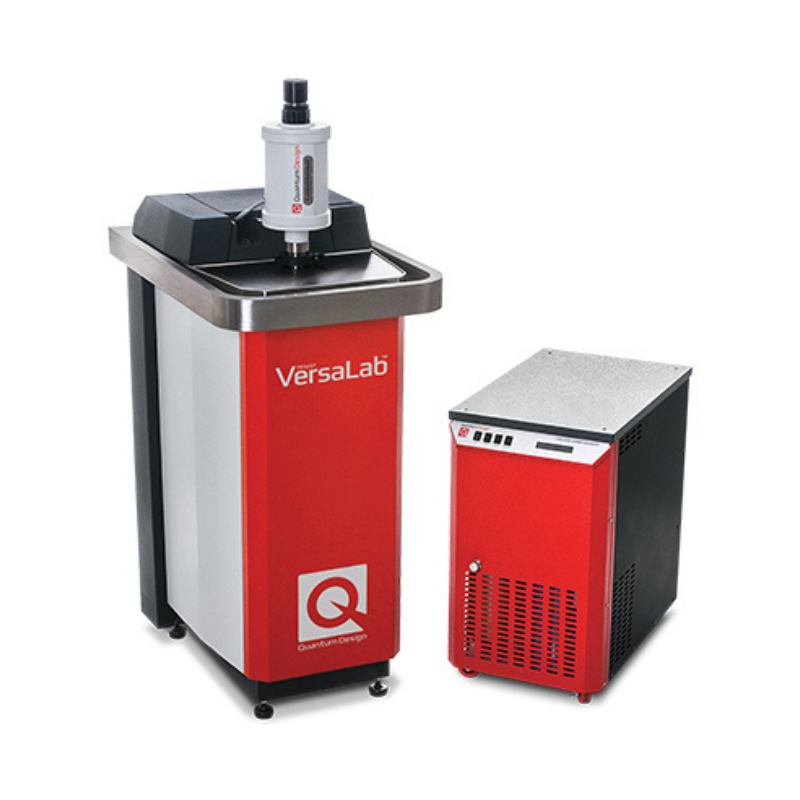
These tools help bridge the gap between lab-scale discovery and deployable quantum technologies.
Supports:
- Device validation
- Semiconductor integration
- Faster feedback loops between fabrication and measurement

Quantum Matter Studies
Discovery Teaching Labs is also helping shape the next generation of quantum researchers through its hands-on educational initiatives centred around the Quantum Design PPMS® VersaLab®. The VersaLab platform enables learners to move beyond theory into real experimental workflows, building familiarity with the same instrumentation used in leading quantum and semiconductor research facilities worldwide. Discovery Teaching Labs is helping create a highly skilled talent pipeline equipped to support the future growth of quantum technologies and advanced materials research.

Instrumentation as the Catalyst for Quantum Material Research Breakthroughs
Across all three trends, one theme is clear: progress in quantum materials is inseparable from advances in measurement technology.
As the field evolves, experiments are becoming more complex, conditions more extreme, and the requirements for precision more demanding. The ability to reliably probe quantum behaviour at ultra-low temperatures, under high magnetic fields, and across nanoscale dimensions is no longer a specialist capability—it is becoming foundational infrastructure for the future quantum economy.
The next phase of quantum research is likely to focus on scalability, manufacturability, and system integration. Researchers are increasingly moving beyond demonstrating isolated quantum effects and toward building stable, interconnected quantum devices that can operate outside controlled laboratory environments. This includes fault-tolerant quantum computing architectures, room-temperature quantum sensors, integrated photonic quantum circuits, and hybrid systems that combine quantum and classical electronics on the same platform.
At the same time, the role of quantum materials is expected to expand significantly across sectors including healthcare, aerospace, defence, energy, navigation, and telecommunications. Quantum sensing technologies may revolutionise medical imaging and subsurface mapping, while advances in quantum-secure communications could reshape cybersecurity infrastructure globally.
Another emerging direction is the use of automation and machine learning in quantum materials discovery. AI-driven experimentation, autonomous laboratories, and real-time data analysis are beginning to shorten development cycles and accelerate the transition from theoretical prediction to deployable technology.
Education and workforce development will also become increasingly important. As quantum technologies move closer to industrial adoption, demand is growing for researchers and engineers with hands-on experience using advanced instrumentation platforms. Initiatives such as Discovery Teaching Labs are helping prepare this next generation by introducing students to the same experimental systems used in leading research facilities and semiconductor environments.
Ultimately, the future of quantum technology will depend not only on breakthrough materials, but on the infrastructure that allows scientists to measure, understand, refine, and scale them. This is where advanced instrumentation plays a defining role—providing the bridge between quantum discovery and practical technological deployment.

Working on something new? Whether it’s early-stage research or scaling an existing process, we’d love to hear about it. Reach out for an informal discussion with our scientific team—we’re here to help turn complex challenges into practical solutions. Call today on (01372) 378822.